
Haunting Past
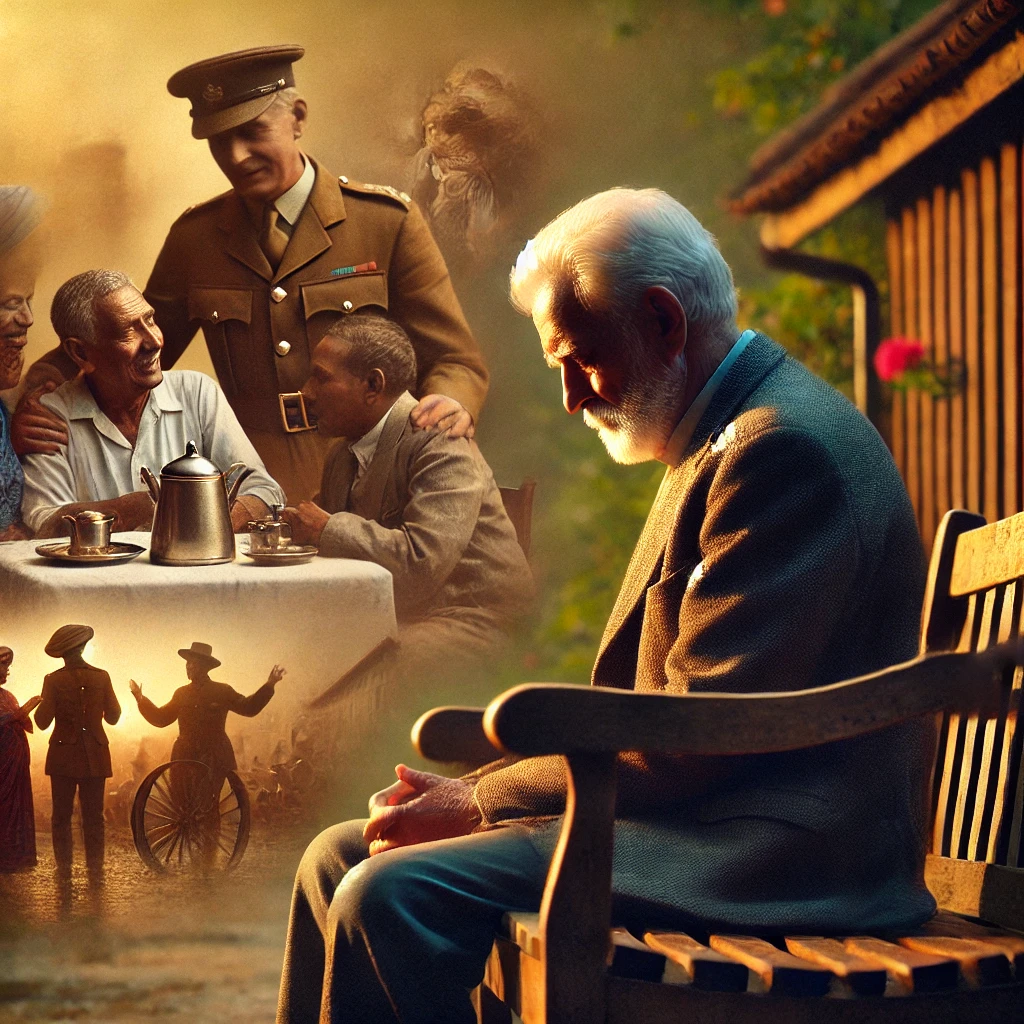
I worked as a government official before the India-Pakistan partition. My colleagues called me Binal Babu. Our staff included both Hindus and Muslims, working under English officers. Even though the British ruled over us and there was unrest everywhere, my life was simple. I worked during the day, came home in the evening, enjoyed good food, took long walks, and spent my nights at a tea shop with my best friends—Karim, Usif, Abdul, and Sharma. When we were together, religion never crossed my mind.
I often wondered how freedom fighters found the courage to endure so much pain. Sacrificing everything for the country seemed impossible to me. My part in the movement was simply discussing it with my friends at the tea shop. We all enjoyed debating about current events. In fact, most people were like me—watching, talking, but never taking action.
At work, the English officers mistreated us. They shouted at us for small mistakes, insulted us, and made us feel inferior. Their words hurt me deeply. I tried to ignore them and think positively, but it was hard. I hated them inside, even though I acted polite on the outside. I did my work well, but I was always waiting for the moment I could leave and meet my friends—the only time I felt free.
I needed my job to support my family, so I stayed quiet. But my frustration kept growing. I had no way to release it, so I took it out on my wife. She never argued back. A few hours later, she acted as if nothing had happened. But when she had enough, she took out her anger on our children.
The British left, and India was divided. Suddenly, people like me, who had always stayed quiet, became aggressive.
When I heard that my brother and his family had been killed in Lahore, I was deeply sad. But that sadness soon turned into anger. I joined a group of angry men and became violent. I surprised myself. Where was this anger when we were fighting for freedom? But soon, I realized what I had done. How could I take revenge on innocent people who had nothing to do with my pain? It was like searching for a lost coin on the street that I lost at home.
For years, I convinced myself that I did the right thing. I told myself, “They started the fight. It was all part of God’s plan, and that I was just a small part of it. Also, I wasn’t alone in the violence, and I wouldn’t be alone in hell either”.
But I never felt peace. No one punished me, no one called me a criminal, yet my own thoughts tortured me. The ‘hell’ people talk about after death—I was already living it.
To make up for my past, I started helping people. It made me feel better for some time. But during quiet moments, the guilt still came back. What if people found out what I had done? “Cat went to Hajj after eating 100 mice”. Would they call me a hypocrite?
I felt that ending my life was the only way to escape my past. It was a do-or-die moment. My mind turned to God—it just happened. That was when I began practising meditation.
It was difficult in the beginning, but gradually, I became a happier person. The past still crosses my mind, and I sometimes wish I had never done those things. But now, the pain no longer controls me the way it once did.
This Post Has 4 Comments
Leave a Reply to Vanisha Uppal Cancel reply
Related Posts




Wonderful share.
Thanks a lot, Murthy ji 🙏
Yes this our journey on the earth plane and when we realise and change our thoughts and actions it’s so uplifting and how light it makes us feel.
Brinda
Dear Brinda, Thank you so much for your replay 🙏. We observe the thoughts, that is the only thing in our hand, the more we try hard to change it, in a subtle way it will become a fight with ourselves. We simply let it be, and slowly do our work, live with it. And whatever happens after that, change or no change lets us wait and see. 🙏